introduction: in the deployment of site clusters for local and international users in hong kong and the greater bay area, it is crucial to choose the appropriate hong kong site cluster optimization strategy and load balancing solution. this article provides load balancing optimization practices and implementable suggestions under multi-site deployment from the perspectives of architecture, performance, and seo, helping engineering and operations teams improve region-related search performance while ensuring availability.
common challenges in multi-site deployment include regional delays, traffic surges, duplication of cross-site resources, and scattered search engine inclusions. hong kong site group optimization should not only focus on single-point response speed, but also deal with ip geographical distribution, content consistency and domain name strategies to avoid duplicate content and weight dilution caused by multiple sites.
hong kong is an international transit node, but when users come from the mainland, hong kong, macao and overseas, network routing and latency are significantly different. the local computer room, cdn edge node and anycast or gslb strategy should be selected based on the target user distribution to reduce the first packet time and improve the search engine crawling experience.
common solutions include dns layer gslb, traffic-based reverse proxy (such as nginx/haproxy), cloud vendor l7/l4 load balancing and cdn acceleration. when comparing, focus on routing granularity, failover time, session persistence, and health check capabilities, and then combine traffic patterns to decide on a hybrid solution.
gslb can direct users to the best site through geographical routing, delay measurement or weight distribution. implementation points include reasonable ttl settings to balance switching speed and caching effects, configuring health detection strategies, and combining with cdn to avoid switching failures caused by dns caching.
deploying cdn edge caching in hong kong can significantly reduce access latency and relieve pressure on the origin site. it is recommended to set up long cache for static resources, perform edge rendering or cache preheating for key pages, and use cache layering strategies and legal cache invalidation mechanisms to ensure content consistency and seo crawling friendliness.
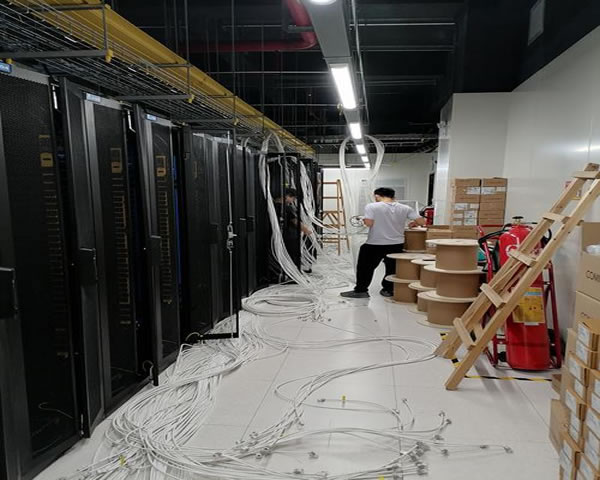
reverse proxy (nginx/haproxy) provides request distribution, circuit breaker and current limiting functions. session persistence can use cookies/consistent hashing or distributed session storage. placing ssl offloading on the edge or load balancer can reduce the computing burden of the origin site and improve concurrent processing capabilities.
it is recommended to establish a monitoring system with rps, rtt, error rate and back-end queue length as the core, combined with visual alarms and automatic expansion and contraction strategies. fault recovery requires preparation of cross-availability zone backups, fast dns switching, and health check rollback processes to ensure high availability of the site cluster.
hong kong site group optimization should pay attention to domain name strategy, canonical tags and hreflang implementation in seo to avoid duplicate content. server ip geographical location, page loading speed and stability will all affect regional search results. it is recommended to use localized content and structured data to improve serp performance.
it is recommended to analyze traffic and user distribution first, then build cdn and edge cache, then implement gslb or dns routing, and finally optimize through reverse proxy and session management at the origin site level. each step requires a combination of stress testing and incremental releases to reduce risk.
summary: when comparing "which hong kong site group optimization is better?", target user distribution, sla requirements and cost control should be used as the criterion. in practice, priority is given to the hybrid strategy of cdn+gslb, supplemented by localized computer rooms and improved monitoring. it is recommended to use data-driven continuous optimization, regularly review seo settings and conduct disaster recovery drills to ensure that multi-site deployments strike a balance between performance and search engine friendliness.
- Latest articles
- Enterprise-level Application Hong Kong Site Group Vps Load Balancing And Backup Solution Analysis
- Seize The Trial And First-month Discount To Realize How To Buy Cheap Servers In Cambodia. Practical Steps
- Advantages Of Vietnam’s Native Residential IP In Regional Data Collection And User Behavior Analysis
- Parameters And Deployment Suggestions For Optimizing The Performance Of Cambodian Cloud Servers For E-commerce Scenarios
- Why Companies Choose Huawei Cloud Server Vietnam For Southeast Asian Market Expansion
- Why Enterprises Choose To Access Hong Kong Servers And Bypass Japan’s Hybrid Cloud Strategy
- Interpretation Of Malaysia Unicom’s Serverless Service From An Operator’s Perspective: Common Causes And Division Of Responsibilities
- Security Control List Helps Enterprises Maintain Access Control For Servers Hosted In The United States
- Construction And Maintenance Why You Should Pay Attention To The Service Provider SLA When Renting A German Server Dedicated Line
- Technical Prevention Improves The Ability Of Enterprises To Resist Attacks Related To Video Of Thailand Computer Room Fraud Incident
- Popular tags
-

Suggestions On Rationalizing The Server Configuration Of The Hong Kong Site Cluster And Sharing Of Best Practices In Cost Control
share recommendations on rationalizing server configurations and cost control best practices for hong kong cluster servers, covering selection, bandwidth, architecture, security, backup and operation and maintenance, to help improve performance and reduce total cost of ownership. -

Advantages And Choice Suggestions For Hong Kong's Stable Cloud Server
This article discusses the advantages and selection suggestions of Hong Kong's stable cloud servers to help users make informed decisions. -

Methods And Cost Estimates For Using Waf And Ddos Protection To Improve Server Security In Hong Kong
this article introduces the key methods, deployment points and cost estimation ideas for improving security through waf and ddos protection in the hong kong cluster server environment, including technical and operation and maintenance suggestions to facilitate the formulation of implementation plans.